
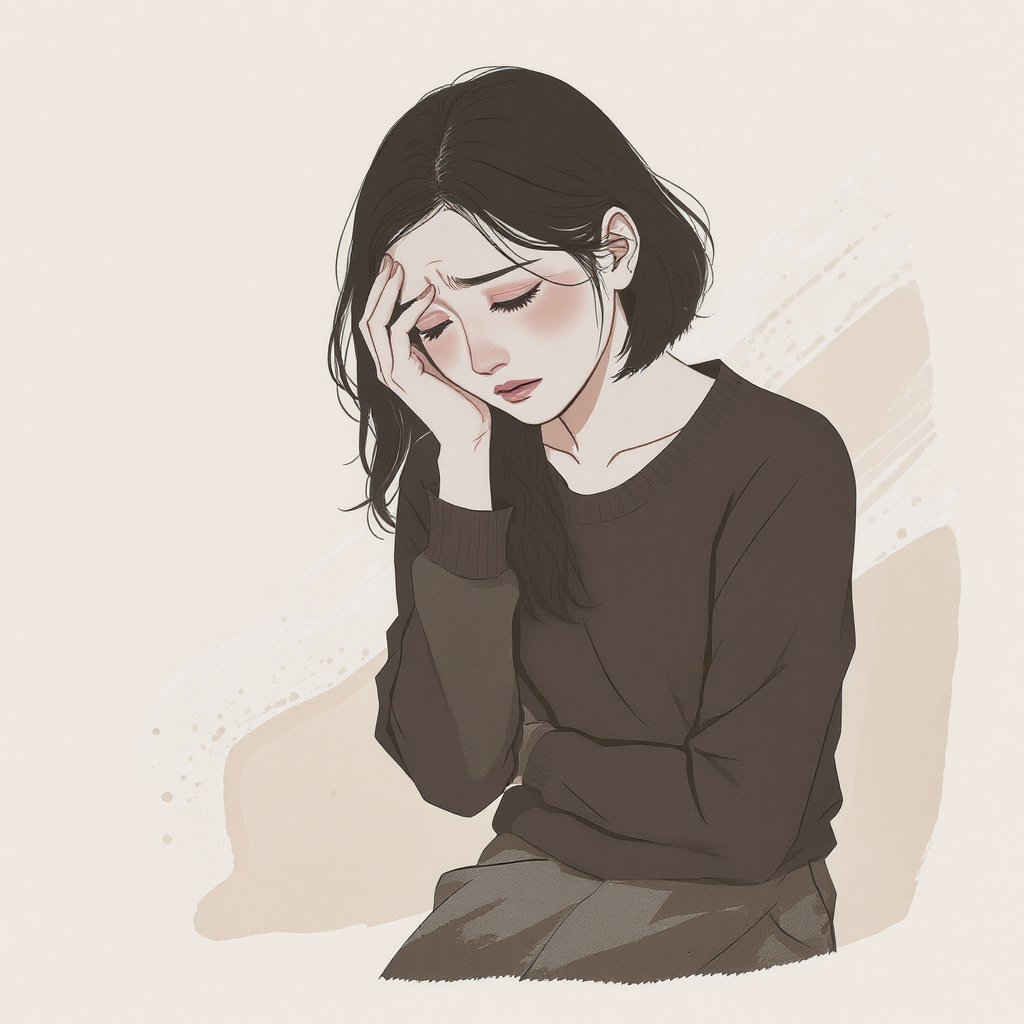
It’s 11 PM and you told yourself you’d be asleep by now. Instead, you’re scrolling your phone, replaying today’s conversations, mentally rewriting an email you sent six hours ago, reorganising your kitchen in your head, and feeling the familiar dread of knowing that tomorrow will be harder because tonight you can’t stop.
Your body is exhausted. Your brain is wide awake. And the harder you try to sleep, the more alert you become.
If bedtime is the worst part of your day — the time when your brain decides to process everything it ignored for the last sixteen hours — you’re experiencing one of the most universal and least discussed aspects of ADHD in women. Sleep problems aren’t a side effect of ADHD. They’re a core feature. And they create a vicious cycle that affects everything else.
Why ADHD Brains Struggle With Sleep
Sleep problems in ADHD aren’t about discipline or sleep hygiene (though the internet will certainly try to convince you otherwise). They’re rooted in how your brain is wired.
Your Brain Doesn’t Wind Down on Schedule
Neurotypical brains have a relatively smooth transition from wakefulness to drowsiness to sleep. ADHD brains don’t. The same executive function challenges that make it hard to start tasks, switch between activities, and regulate attention during the day also make it hard to transition from “awake mode” to “sleep mode.” Your brain doesn’t have a reliable off switch — it has a dimmer that someone else seems to be controlling.
The Revenge Bedtime Procrastination Trap
This term — coined on social media and instantly recognised by ADHD women everywhere — describes staying up late to reclaim personal time that you felt you didn’t have during the day. After spending all day meeting other people’s needs, managing demands, and masking, nighttime finally feels like YOURS. Your brain doesn’t want to give that up — even though you know you’ll pay for it tomorrow.
The Racing Mind
When the world gets quiet, your brain gets loud. Without external stimulation to focus on, your ADHD brain turns inward — replaying conversations, generating worry, creative ideas, to-do lists, and existential questions all at once. This isn’t anxiety (though it can feel like it and can coexist with it). It’s your brain’s default mode network, which is more active in ADHD, finally getting the floor.
Delayed Sleep Phase
Research shows that many ADHD brains have a naturally delayed circadian rhythm — your body’s internal clock is shifted later than the socially expected schedule. You genuinely are not wired to fall asleep at 10 PM and wake at 6 AM. Your biology may prefer midnight to 8 AM. But the world doesn’t accommodate that, so you spend years fighting your own circadian clock and losing.
Stimulation-Seeking at Bedtime
Your ADHD brain craves stimulation. Lying in a dark, quiet room is the opposite of stimulation. Your brain rebels — seeking any source of input it can find. This is why you reach for your phone, why you need the TV on, why you start composing mental novels at midnight. Your brain is looking for the stimulation it needs to feel settled, even though that stimulation keeps you awake.
The Sleep-ADHD Vicious Cycle
Poor sleep doesn’t just make you tired. It makes every ADHD symptom worse:
- Attention becomes harder — sleep deprivation impairs the same prefrontal cortex functions that ADHD already challenges
- Emotional regulation deteriorates — you’re more reactive, more sensitive, more prone to meltdowns and RSD episodes
- Executive function declines — planning, organising, initiating tasks, and managing time all suffer
- Impulse control weakens — you’re more likely to snap at people, make impulsive decisions, and abandon strategies
- Masking becomes unsustainable — the energy required to perform neurotypicality is exponentially higher when you’re sleep-deprived
And here’s the cruel irony: the worse your ADHD symptoms get from poor sleep, the harder it becomes to implement the strategies that would help you sleep better. It’s a self-reinforcing cycle that many ADHD women have been trapped in for years.
How Sleep Problems Show Up for ADHD Women
Can’t Fall Asleep (Sleep Onset Insomnia)
- Lying awake for hours despite being physically tired
- Brain “turning on” the moment your head hits the pillow
- Needing some form of stimulation (phone, TV, audiobook) to fall asleep
- Feeling a surge of energy or alertness in the evening
Can’t Stay Asleep
- Waking multiple times during the night
- Waking early and being unable to fall back asleep
- Light sleeping — any noise or movement disrupts you
- Vivid, intense, or disturbing dreams
Can’t Wake Up
- Feeling like waking up requires physically dragging yourself from another dimension
- Needing multiple alarms (and sleeping through most of them)
- Experiencing “sleep drunkenness” — extreme grogginess and confusion upon waking
- Feeling like mornings are a daily trauma
The Hormonal Layer
For ADHD women, sleep problems often intensify at specific points in the menstrual cycle, during perimenopause, and during major hormonal transitions. Oestrogen and progesterone both affect sleep architecture, and their fluctuations can turn a manageable sleep problem into an unmanageable one.
ADHD-Friendly Sleep Strategies
These aren’t generic sleep hygiene tips. They’re strategies designed for brains that don’t transition, don’t wind down on command, and don’t respond to “just go to bed earlier.”
Creating a Wind-Down Runway
Your brain needs a long, gradual runway to land into sleep. Not the five minutes of “relaxation” that sleep hygiene articles recommend — a genuine transition period.
- Start dimming lights 1-2 hours before bed — this signals melatonin production
- Create a sensory transition: Change into comfortable clothes, lower the temperature, shift to warm or low lighting
- Give your brain a landing pad: An audiobook, podcast, or gentle TV show gives your brain something to focus on so it doesn’t spin off into rumination. This is okay — it’s accommodation, not failure
- Write a “brain dump” before bed — put tomorrow’s worries on paper so your brain can release them
Working With Stimulation Needs
- Weighted blankets provide the deep pressure input that calms many ADHD nervous systems
- White noise or brown noise gives your brain consistent, low-level stimulation that satisfies the need for input without creating alertness
- Cool temperatures (65-68°F / 18-20°C) support melatonin production and reduce restlessness
- Gentle fidgets for bed — smooth stones, soft fabric, putty — can give your hands something to do while your brain winds down
- Body scan meditations or progressive muscle relaxation give your brain a focus task that simultaneously calms your body
Managing the Racing Mind
- The “worry journal”: Keep a notebook by your bed. When a thought insists on being processed, write it down. Tell your brain: “I’ve recorded it. We can deal with it tomorrow.”
- Counting or repetitive mental tasks: Count backwards from 300 by 7s. It’s boring enough to not keep you awake but engaging enough to block rumination
- Visualisation: Create a detailed mental scene (a forest path, a beach) and explore it slowly. This redirects your brain’s storytelling tendency toward something peaceful
- Name the pattern: “My brain is doing its nighttime processing thing. This is ADHD, not an emergency.” Labelling reduces the anxiety that amplifies the racing.
Timing Strategies
- Work with your chronotype when possible — if your brain naturally wants to sleep later, honour that when your schedule allows
- Consistent wake time (more important than consistent bedtime for ADHD brains) — your wake time sets your circadian clock
- Morning light exposure — bright light in the first hour of waking helps regulate your sleep-wake cycle
- Avoid the “I’ll just rest” trap — lying in bed awake for hours teaches your brain that bed is for thinking, not sleeping. If you can’t sleep after 20-30 minutes, get up, do something boring in low light, and return when drowsy
The Medication Conversation
- ADHD stimulant medication can affect sleep — but for some women, it actually improves sleep by reducing the racing mind. The relationship between ADHD medication and sleep is individual and worth discussing with your prescriber
- Melatonin can help with sleep onset, particularly if you have a delayed circadian rhythm. Low doses (0.5-3mg) taken 1-2 hours before desired sleep time are often more effective than higher doses
- Talk to your prescriber about sleep specifically — sleep is a medical concern that deserves direct attention, not an afterthought
How the Flourish Model Supports Sleep
Self-Awareness
Understanding YOUR specific sleep patterns — when your body naturally wants to sleep and wake, what triggers your worst sleep nights, how your cycle affects sleep, and what signals your body sends when it’s ready for rest.
Self-Compassion
Releasing the shame of “I should be able to just go to sleep.” Sleep difficulty is neurological, not a discipline failure. You deserve gentleness about this, not more self-criticism at 2 AM.
Self-Accommodation
Building a sleep environment and routine that works with your ADHD brain — including using audiobooks, weighted blankets, fans, and fidgets without guilt. These aren’t crutches. They’re accommodations. And accommodations are how you give your brain what it needs.
Self-Advocacy
Communicating your sleep needs to partners (“I need the room darker/cooler/quieter”), to your healthcare providers (“My sleep is significantly affecting my functioning”), and to yourself (“Sleep is a priority, not a luxury”).
Self-Care
Recognising that sleep is the foundation of everything else — emotional regulation, executive function, relationships, and wellbeing. Protecting your sleep isn’t selfish. It’s the single most impactful thing you can do for your ADHD.
Frequently Asked Questions
Is it ADHD or insomnia?
It can be both. ADHD-related sleep difficulties and clinical insomnia can coexist, and they often feed each other. The key difference: ADHD sleep problems are typically characterised by a racing mind, difficulty transitioning to sleep, and delayed circadian rhythm, while primary insomnia may involve more straightforward difficulty falling or staying asleep without the “busy brain” component. Many ADHD women have both, and treatment should address both.
Why do I get a burst of energy at night?
This is likely related to your circadian rhythm being naturally delayed. Your brain’s alertness peak may come later in the day than is socially convenient. For some ADHD women, evening is genuinely their most productive, creative, and mentally clear time — which makes early-morning schedules feel like torture.
Should I force myself to stop using my phone before bed?
The blanket “no screens before bed” advice doesn’t account for ADHD brains that need some form of stimulation to settle. The issue isn’t the screen itself — it’s what you’re doing on it. Doom-scrolling social media or watching activating content keeps your brain alert. Listening to a calm podcast, an audiobook, or watching familiar, unstimulating content can actually help. Find what works for YOUR brain, not what the generic advice says.
How much sleep do ADHD women actually need?
Most adults need 7-9 hours, and ADHD brains may need more due to the additional energy expenditure of masking, emotional regulation, and executive function throughout the day. Rather than aiming for a specific number, pay attention to how you feel and function. If you’re consistently exhausted, emotionally reactive, and struggling with focus, you likely need more sleep than you’re getting.
Your Brain Deserves Rest
You are not failing at sleep. You have a brain that processes stimulation, transitions, and circadian rhythms differently — and you’ve been trying to force it into a sleep pattern that was never designed for you.
You deserve a bedtime that doesn’t feel like a battle. You deserve to wake up feeling rested instead of defeated. And you deserve strategies that actually work for your brain — not the ones that work for everyone else’s.
Sleep isn’t a luxury. It’s the foundation. And your ADHD brain needs you to treat it that way.
At Flourishing Women, we know that sleep is foundational to everything — emotional regulation, executive function, relationships, and wellbeing. Through the Flourish Empowerment Model, we help ADHD women build sleep practices that honour their neurology. Learn about our coaching and support groups.