
By Kristen McClure, MSW, LCSW | Flourishing Women
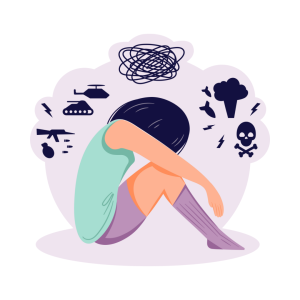
You’re crying and you don’t know why. Or you’re suddenly furious about something small — and then drowning in shame about the reaction. Or you’re replaying a conversation from this morning on an endless loop, unable to think about anything else, while your to-do list piles up and your body feels like it’s vibrating with tension.
If you’ve ever felt like your emotions appear out of nowhere and overwhelm you — you’re not alone. For many women, ADHD emotional dysregulation is one of the most overlooked but life-shaping experiences we carry. It’s the part of ADHD that nobody warned us about, that doesn’t appear clearly in the official diagnostic criteria, and that gets misdiagnosed as anxiety, depression, or a personality disorder more often than it gets correctly identified.
This isn’t a character flaw. It’s neurology. And understanding it changes everything.
What Is ADHD Emotional Dysregulation?
Emotional dysregulation in ADHD means your feelings arrive fast and strong, and it’s hard to calm down or think clearly once they hit.
When you’re dysregulated, you might:
-
Feel emotions suddenly, before you even know what’s happening
-
Get anxious because your body thinks there’s danger, even when there isn’t
-
Feel confused about what you’re actually feeling
-
Struggle to focus, think, or problem-solve because your brain is overwhelmed
When someone calls you “too emotional,” the stress increases. Your nervous system doesn’t need judgment — it needs understanding. Without this, it moves into fear and deeper dysregulation. What actually helps is validation, support, and the space to be fully human.
Why ADHD Brains Process Emotions Differently
ADHD emotions tend to arrive fast and with a lot of intensity. That intensity can be a strength — it fuels passion, creativity, and deep empathy. But it can also make emotional regulation harder, especially when you’ve had to manage it in environments that don’t fit your needs.
Emotions Move Faster Than Thinking
In ADHD brains, emotions often show up before your thinking brain has a chance to notice or make sense of them. This might look like crying or snapping suddenly, shutting down quickly, or feeling overwhelmed before you know why. Feelings occur first; your reaction follows; and your thinking brain only catches up afterward.
The Default Mode Network Stays Active
The Default Mode Network (DMN) is the part of the brain that usually quiets down during focused attention. In ADHD brains, it often stays active during times that should feel restful — when you’re lying down, when you’re not focused on anything, when you’re trying to fall asleep. When it stays active, you may replay past mistakes, get stuck in worry spirals, or feel emotionally overloaded during moments that should feel calm.
Hard to Slow Down Once Activated
Once emotions are activated, ADHD brains can have more difficulty bringing them back to a manageable level. This isn’t a choice — it’s part of how your nervous system regulates arousal and stress.
Always on Alert
Small stressors can feel big when your body is used to scanning for danger. If you’ve experienced years of criticism or invalidation, your nervous system may be primed to react quickly. This is not because you’re “too sensitive,” but because your brain has learned to protect you in environments that didn’t feel safe.
Negative Stickiness
ADHD brains can hold on to negative experiences more easily than positive ones. These memories may replay automatically, making it feel like old hurts are happening again right now. You may experience emotional flashbacks, react to current situations as if they are past threats, or get stuck in rumination loops.
How ADHD Emotional Dysregulation Shows Up in Daily Life
Emotional Reactions
-
Crying or tearing up “out of nowhere”
-
Feeling a wave of anger, then crashing into shame
-
Lashing out at the people closest to you
-
Feeling overwhelmed without a clear trigger
Thought Patterns
-
Replaying conversations for hours
-
Thinking, “I should be able to stop this, but I can’t”
-
Obsessing over a mistake
-
Anxiety spirals that feel impossible to break
Behavioural Struggles
-
Procrastination and task paralysis
-
Struggling to start or finish things
-
Avoidance of anything that might trigger more emotion
Body and Brain Signals
-
Going numb or silent
-
Brain fog that descends without warning
-
Physical tension, stomach knots, chest tightness
The Role of Chronic Stress and Hormones in Emotional Regulation
For many ADHD women, the hardest part of regulating emotions isn’t just neurological sensitivity — it’s the constant environmental stress of living in systems that don’t fit how they think, feel, or work.
Hormonal changes across the menstrual cycle — and during life stages like pregnancy, postpartum, and perimenopause — can further amplify ADHD emotional dysregulation, especially when stress levels are already high.
When environmental pressures are constant, your system never gets the full reset it needs. Over time, living in high alert starts to feel normal, and emotional regulation becomes harder to access.
Frequently Asked Questions About ADHD Emotional Dysregulation
Why Isn’t Emotional Dysregulation in the ADHD Diagnostic Criteria?
Emotional regulation challenges are central to many ADHD women’s experiences, but they are not formally included in the DSM diagnostic criteria. Because of this, ADHD women are often misdiagnosed with anxiety, depression, borderline personality disorder, or bipolar disorder. This reflects gaps in the diagnostic system — not flaws in you.
Is emotional dysregulation the same as being “too emotional”?
No. “Too emotional” is a judgment. ADHD emotional dysregulation is a neurological pattern where emotions arrive quickly and intensely, and the brain’s regulatory systems need more time and support to process them.
At Flourishing Women, emotional regulation is a core focus of our work. Through the Flourish Empowerment Model, we help ADHD women understand their nervous systems, build practical regulation tools, and create lives that support — rather than punish — emotional intensity. Learn about our coaching and support groups.